
Microcar (brommobiel) rules: everything about the 45 km/h car
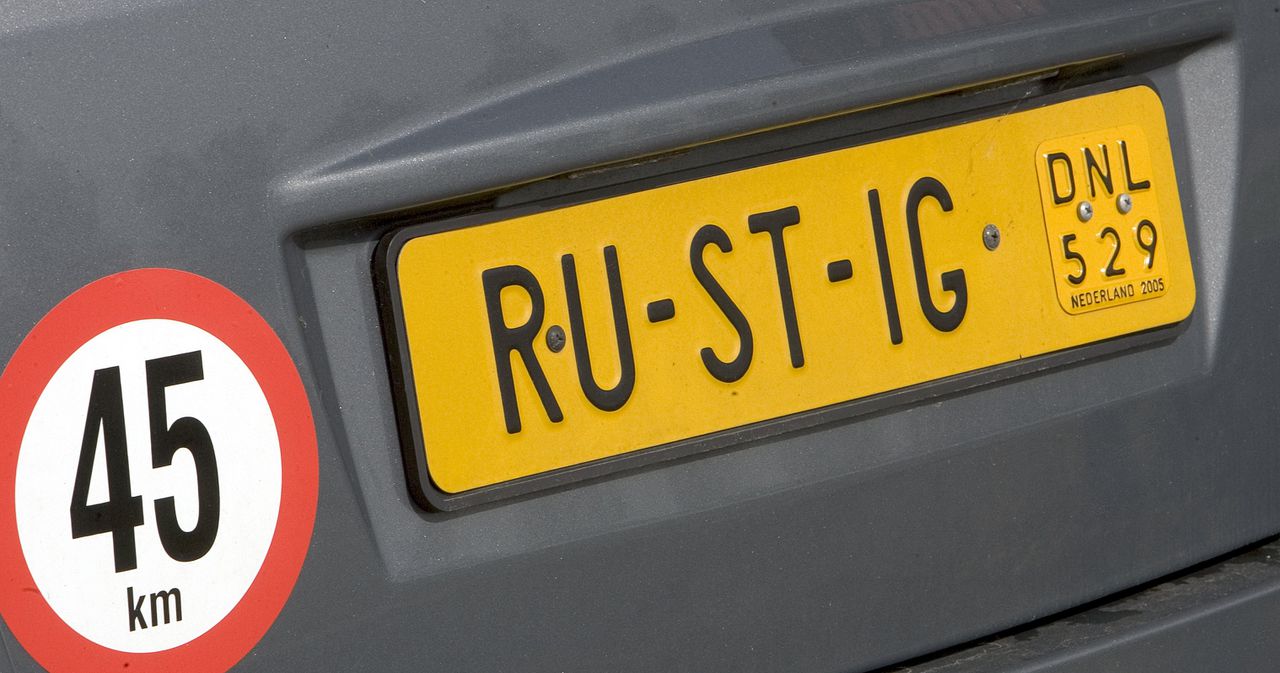
A microcar looks like a small car, but under Dutch law it is a moped. That is why it has its own rules: for the licence, the speed and the roads where you may and may not drive. Here they all are, with the traffic signs you need to know.
The rules at a glance
- A microcar (in Dutch: brommobiel) is a moped with more than two wheels and a body.
- A microcar is not a motor vehicle, but it does follow the rules for motor vehicles, unless stated otherwise.
- You always drive on the main roadway.
- You may not drive faster than 45 km/h.
- The microcar must be insured (third-party liability).
- You need an AM licence and must be at least 16 years old.
What is a microcar?
The Dutch traffic regulations (RVV 1990) define a brommobiel as a "moped on more than two wheels, fitted with a body" (article 1). It is also called a 45 km/h car or microcar.
Because it is officially a moped, a microcar is not a motor vehicle. Still, it does not drive among the cyclists: under article 2a of the RVV, the rules for motor vehicles apply to microcars instead of the moped rules, unless stated otherwise. In practice you behave like a car, with a few important exceptions listed below.
Licence and age
| Licence | What may you drive? |
|---|---|
| AM2 (moped licence) | Moped, light moped, speed pedelec and microcar. |
| AM4 (microcar licence) | Only a microcar (and a quad or trike up to 45 km/h). The 4 stands for four-wheeler. |
| B (car) or A (motorcycle) | The AM category is included automatically. No separate exam needed. |
- Theory exam: from 15.5 years. AM2 and AM4 share the same theory exam.
- Practical exam: from 16 years. You then take the practical exam for the moped (AM2) or for the microcar (AM4). The microcar exam includes manoeuvres such as bay and parallel parking and reversing in a straight line.
Where may a microcar drive?
A microcar always drives on the main roadway, just like a car. That also applies when there is a cycle/moped path next to the road.
- Not on the cycle path, the cycle/moped path or the footpath.
- Not on the motorway or the expressway (see the signs below).
- Yes on normal roads inside and outside built-up areas, including roads with an 80 km/h limit. You then drive at most 45 km/h.
Traffic signs for microcars
Know these signs if you drive a microcar:
| Sign | Meaning | Microcar? |
|---|---|---|
 G1 |
Motorway: only for motor vehicles that can and may drive at least 60 km/h. | Not allowed |
 G3 |
Expressway (autoweg): only for motor vehicles that can and may drive at least 50 km/h. | Not allowed |
 C9 |
Closed to riders, livestock, agricultural vehicles, microcars, bicycles and mopeds, among others. | Not allowed |
 G11 |
Mandatory cycle path. | Not allowed |
 G12a |
Mandatory cycle/moped path. Ordinary mopeds must use it, a microcar must not. | Not allowed |
Note the difference with an ordinary moped: a scooter must use the cycle/moped path (G12a), a microcar may never drive there. See all signs for special roads and prohibition signs.
How fast may a microcar go?
At most 45 km/h (article 22 RVV 1990). That applies everywhere, including roads where cars may drive 50 or 80 km/h. Where a lower limit applies, such as in a 30 km/h zone, you keep to that lower limit.
Seat belt, helmet and equipment
- Seat belt: if the microcar has seat belts, the driver and passengers wear them (article 59).
- Helmet: only required in a microcar without a closed body. If that open microcar has seats with the correct belt anchorage and you wear the belt, no helmet is needed (article 60).
- Number plate: a yellow moped plate at the rear. Carry the registration certificate with you.
- Insurance: at least third-party liability (WA).
- Also: a rear-view mirror, lights and reflectors.
Parking
Because the rules for motor vehicles apply, you park a microcar like a car: on the roadway or in a parking bay, following parking signs and paid parking. The rule that bicycles and mopeds may be parked on the pavement (article 27) does not apply to microcars. Many municipalities have their own rules and permits for microcars, so also check your municipality's website.
Phone and alcohol
As in a car, you may not hold a phone while driving. Hands-free calling is allowed if it is safe. And do not drive under the influence of alcohol, drugs or medicines that affect your driving.
Microcars in the car theory exam
Even when you study for your car licence, you can get questions about microcars. Remember:
- A microcar drives on the roadway, not on the cycle path. So expect it ahead of you on the road.
- It drives at most 45 km/h, even on an 80 km/h road. Keep your distance and only overtake when it is safe.
- You will not meet microcars on the motorway or expressway.
- The same priority rules apply as for cars. Read them in Dutch priority rules explained.
Frequently asked questions
Which licence do you need for a microcar?
An AM licence: AM2 (moped and microcar) or AM4 (microcar only). With a car or motorcycle licence you may also drive a microcar.
From what age can you drive a microcar?
From 16. You can take the theory exam from 15.5.
May a microcar use the cycle path?
No. A microcar always drives on the roadway, even where there is a cycle/moped path.
May a microcar use the motorway?
No. The motorway (G1) and expressway (G3) are only for motor vehicles that can and may drive at least 60 or 50 km/h.
How fast may a microcar go?
At most 45 km/h, or less where signs show a lower limit.
Sources: RVV 1990 (articles 1, 2a, 22, 27, 59 and 60), Rijksoverheid: rules for microcars and CBR: licence for a moped or microcar (all in Dutch, checked on 26 October 2026). Zielaan is independent and not affiliated with the CBR.
Stay updated on CBR exams & theory tips
Add Zielaan to your preferred sources in Google Search to always see our newest exam tips and CBR changes.
Practise the traffic rules
Test yourself with a free practice exam in the same format as the CBR, with an explanation for every question.
Start free practice exam